



There are holidays that mark time, and then there are holidays that redefine it. Nowruz, the Persian New Year, does not simply signal the start of another calendar cycle. It represents alignment. With nature. With intention. With self.
Celebrated for over 3,000 years, Nowruz arrives not based on a man-made date, but at the exact moment of the spring equinox. Day and night stand in perfect balance. Light equals darkness. And in that brief, precise moment, something powerful happens. The world resets.
If you understand Nowruz properly, you do not just celebrate it. You experience it. You embody it. You use it as a strategic reset for your life.
The Origin of Nowruz: A 3,000-Year Legacy of Renewal
Nowruz originates from ancient Persia, rooted in Zoroastrianism, one of the world’s oldest monotheistic religions. This is not a trend-driven holiday. It is a civilization-level tradition that has survived empires, wars, migrations, and modern reinvention.
At its core, Nowruz was designed around one principle: harmony between humans and nature.
Ancient Persians understood something that modern society often forgets. Timing matters. Energy cycles matter. Renewal is not random; it is seasonal, intentional, and earned.
The arrival of spring symbolized more than warmer weather. It represented rebirth. Crops would grow again. Darkness would recede. Life would return.
Nowruz became the embodiment of that belief. A structured, intentional way to leave behind what no longer serves and consciously step into what does.
Today, it is celebrated across Iran, Afghanistan, Central Asia, parts of the Middle East, and within Persian communities worldwide. Despite geographic differences, the core philosophy remains unchanged.
Reset. Renew. Rise.
The Exact Timing: Why Nowruz Is Not Just “Another New Year”


This is not symbolic. It is astronomical.
At that exact second, the sun crosses the celestial equator. Day and night are equal in length across the globe. Balance is not a metaphor here; it is a measurable reality.
That level of precision matters.
Because Nowruz is not based on convenience. It is based on alignment.
When you anchor your reset to nature’s balance, you are not forcing change. You are stepping into it at the moment it is already happening.
There is a lesson here that most people miss. If your timing is off, your results will be too.
Nowruz teaches that transformation works best when it is aligned, not rushed.
Khaneh Tekani: The Discipline of Clearing Your Space
Before Nowruz arrives, there is a non-negotiable process: Khaneh Tekani, which translates to “shaking the house.”
This is not casual spring cleaning. It is strategic.
Homes are deep-cleaned. Closets are purged. Old items are discarded or donated. Every corner is reset.
Why?
Because you cannot step into a new year carrying the weight of the old one.
This principle extends beyond physical space. It is psychological. Emotional. Energetic.
What habits are no longer serving you?
What relationships are draining your capacity?
What patterns are you still repeating out of familiarity, not growth?
Nowruz forces an audit.
And here is the truth most people avoid. Growth requires removal. You do not add a better life on top of a cluttered one. You create space for it.
The Haft-Seen Table: A Masterclass in Symbolism


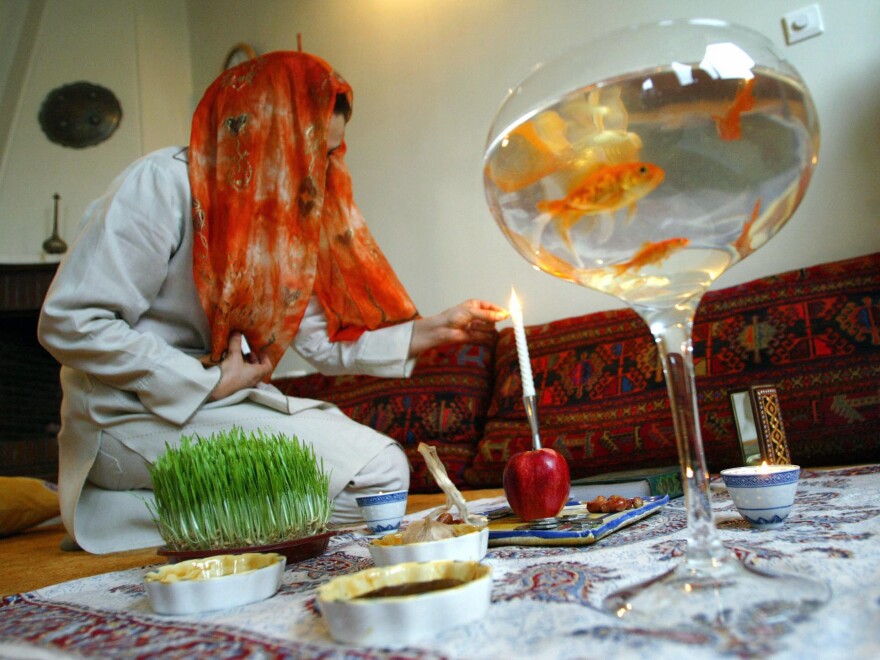
At the center of Nowruz is the Haft-Seen table. Seven items, all starting with the Persian letter “S,” each representing a core pillar of life.
This is not decoration. This is intention made visible.
Here is what each element represents:
-
Sabzeh (sprouted greens) – Growth and renewal
-
Samanu (sweet pudding) – Strength and resilience
-
Senjed (dried fruit) – Love and wisdom
-
Seer (garlic) – Health and protection
-
Seeb (apple) – Beauty and vitality
-
Somaq (sumac) – Sunrise and patience
-
Serkeh (vinegar) – Aging and acceptance
Additional elements are often included:
-
A mirror, representing reflection
-
Candles, symbolizing light and clarity
-
Goldfish, representing life and movement
-
Hyacinth flowers, representing spring
-
A book of poetry or spiritual text, grounding the table in culture and thought
The Haft-Seen is a visual contract. It defines the values you are choosing to prioritize in the year ahead.
Most people set vague goals. Nowruz sets symbolic anchors.
And that is the difference between intention and execution.
Chaharshanbe Suri: Burning Away the Old


In the days leading up to Nowruz, there is a fire festival called Chaharshanbe Suri.
People jump over flames, chanting a phrase that translates to:
“Give me your red colour, take away my yellow.”
The symbolism is direct.
Red represents energy, strength, and vitality.
Yellow represents sickness, weakness, and stagnation.
This ritual is not passive. It is an active release.
You are not hoping for change. You are declaring it.
And here is where most people fall short in their own lives. They want transformation without confrontation. They want growth without letting go.
Nowruz does not allow that.
If you want the new, you must burn the old.
The First Moments: Entering the New Year with Precision
When the exact moment of Nowruz arrives, families gather around the Haft-Seen table.
There is stillness. Anticipation. Presence.
And then, the shift.
People exchange kisses, hugs, and well-wishes. Elders give gifts, often money, to younger family members. It is both emotional and strategic. Gratitude and forward momentum.
This moment matters because it sets the tone.
How you enter something often dictates how it unfolds.
Most people drift into a new year distracted, unprepared, and reactive.
Nowruz demands intention.
You sit. You reflect. You begin with clarity.
Did o Bazdid: The Power of Connection
Nowruz is not an isolated experience. It is deeply social.
For 13 days, families visit one another in a tradition called Did o Bazdid.
You start with the elders. You show respect. You strengthen relationships.
This is not random socializing. It is a structured connection.
And that structure matters.
Because in a world where people are increasingly disconnected, Nowruz reinforces something critical. Your environment influences your trajectory.
Who you surround yourself with will either elevate or dilute your standards.
Nowruz makes you audit that as well.
Sizdah Bedar: Releasing the Energy Back to Nature
On the 13th day, the celebration ends with Sizdah Bedar.
Families go outdoors. Parks, nature, open spaces.
The sabzeh, those sprouted greens from the Haft-Seen, are thrown into running water.
Why?
Because they have absorbed the energy, intentions, and negativity of the past year.
Releasing them symbolizes letting go.
This is the final step in the Nowruz cycle.
Not just setting intentions. Not just celebrating.
But completing the process by releasing what you no longer carry.
Most people start strong and fade. Nowruz builds a full cycle. Beginning, action, and closure.
That is execution.
Why Nowruz Still Matters Today
In a modern world driven by speed, distraction, and constant noise, Nowruz offers something rare.
Structure. Meaning. Depth.
It forces you to pause. To evaluate. To reset with intention.
This is not about culture alone. This is about strategy.
If you approached your life the way Nowruz is designed, your outcomes would change.
You would:
-
Audit your environment regularly
-
Align your goals with natural timing, not pressure
-
Set symbolic anchors for your priorities
-
Remove what no longer serves you
-
Reinforce meaningful relationships
-
Close cycles properly before starting new ones
This is not tradition for tradition’s sake.
This is a blueprint.
A Final Perspective
Nowruz is not just about a new year. It is about becoming the version of yourself that is aligned with growth.
It is about understanding that renewal is not accidental. It is intentional, structured, and often uncomfortable.
But it is necessary.
Because if you do not reset consciously, life will reset you by force.
And that version is rarely the one you would have chosen.
So the question is simple.
What are you bringing into your new year, and what are you finally leaving behind?
Recommended Support Tools
If you want to embody the philosophy of Nowruz, not just read about it, you need systems that support reflection, clarity, and execution.
-
My Journal (365-Day Lined Journal)
If you need a space to unload your thoughts, track your evolution, and document your reset, this is your foundation. A blank page is one of the most underrated tools for transformation. Use it daily. No filters. No overthinking. Just clarity.
Published on: www.thepursuitofhappinessnoz.com
For Podcast Episodes, please visit: https://thepursuitofhappinessnoz.com/podcasts/
For more long-form cultural and identity-driven essays, visit: https://thepursuitofhappinessnoz.com
Affiliate Note: This post may contain affiliate links. If you choose to purchase through them, it helps support this site at no additional cost to you.
SHARE
- Email a link to a friend (Opens in new window) Email
- Share on X (Opens in new window) X
- Share on Facebook (Opens in new window) Facebook
- Print (Opens in new window) Print
- Share on LinkedIn (Opens in new window) LinkedIn
- Share on Pinterest (Opens in new window) Pinterest
- Share on X (Opens in new window) X
- Share on Reddit (Opens in new window) Reddit
- Share on Tumblr (Opens in new window) Tumblr
- Share on Telegram (Opens in new window) Telegram
- Share on Threads (Opens in new window) Threads
- Share on Mastodon (Opens in new window) Mastodon
- Share on Nextdoor (Opens in new window) Nextdoor
- Share on WhatsApp (Opens in new window) WhatsApp
- Share on Bluesky (Opens in new window) Bluesky
Related
Discover more from The Pursuit Of Happiness
Subscribe to get the latest posts sent to your email.